Plantar Fasciitis Treatment; Deep Tissue Massage
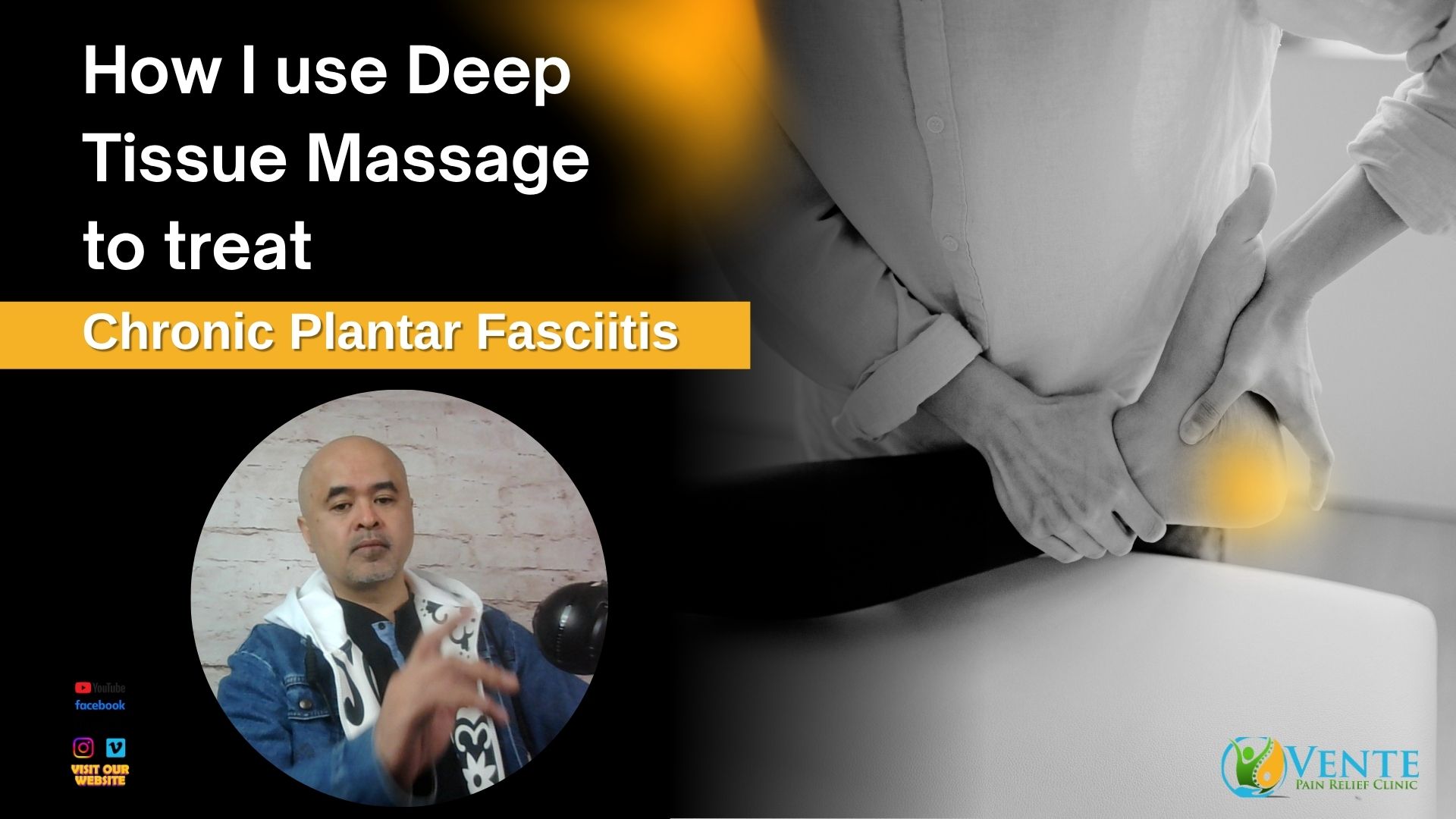
Chronic Plantar fasciitis treatment using deep tissue massage can help manage the pain and discomfort. There will come a period, that if you’ve had this condition for a long period, that you will seek a more aggressive approach. This is especially true if most of your treatments have been more passive. In our video, we discuss how we use deep tissue massage for chronic Plantar Fasciitis. Watch the video to learn more.
Why Deep Tissue Massage?
Typically this can be an excellent treatment choice, especially if you have had the issue for more than 3 months. There are some therapists that believe that aggressive treatments directly to the area, should be avoided. The reasoning for some is that it can cause more inflammation.
Chronic Plantar Fasciitis treatment requires a more aggressive approach. Here are my reasons:
- Sometimes tissues can become so tight that a light approach or more of a passive approach is insufficient.
- There can be scar tissue and tissues that are adhered (stuck together) causing pain and discomfort. This can require more aggressive techniques to the fascia and techniques to “break down” these adhesions.
- The Plantar Fascia is a very thick, tendinous tissue. With this condition, the tissue can feel thickened and “rope-like”. It also has muscles that attach to it. These muscles and this tendinous tissue need deeper techniques to relax these tissues.
Will there be inflammation after treatment? Most likely, yes. This can be part of the healing process. It is short term but there are longer term benefits. If you’ve suffered for a long time, my philosophy is that suffering short term can have longer term benefits otherwise, the condition can be more prolonged.
The Plantar Fascia

This image is from Grey’s Anatomy. This is the bottom of the foot and near the heel is that whitish tissue, this is the origin of the Plantar Fascia. You can see that there are muscles that also attach to this tissue. These muscles, if tight, can exacerbate the condition. You can also see that the Plantar Fascia extends into the toes.
An important function of the Plantar Fascia is to stabilize the region between the heel and the toes (Longitudinal Arch). Sometimes the Plantar Fascia, around the heel can become inflamed. The inflammation can be rooted from activities such as volleyball, running, tennis and heavy squats. It can also be aggravated via sudden weight gain, such as in pregnancy.
What can I expect?
Chronic Plantar Fasciitis treatment, can be very uncomfortable to downright excruciating. Over time though as the tissues relax the discomfort becomes lessened.
After treatment, you can feel some discomfort and pain due to the techniques that can cause inflammation as a “side-effect” of the aggressive treatment. Ice and light stretching can help ease the discomfort.
What can be the timeline? Plantar Fasciitis is one of the most annoying musculoskeletal conditions to treat. The condition can last for a few weeks, months even and sometimes more than a year. This really will depend on factors such as style of treatment, any biomechanical factors that can exacerbate the condition. For example, are the glutes/hips super tight causing biomechanical issues down the chain? It can also depend on the amount of rest the foot is given. And the patient being consistent with exercises.
If you have had Plantar Fasciitis for a few months and have used a passive approach, it can be time to switch the treatment style. Plantar Fasciitis treatment, using deep tissue massage can be painful but it can very helpful for long-standing chronic issues.
If you are encountering this, please give us a call and we can discuss your case.
More resources:
Are you encountering hip, lower back and thigh pain? Here is a video on a condition that can cause these symptoms, IT Band syndrome. Learn more here. Follow our Instagram for informative shorter form videos!
