IT Band Syndrome
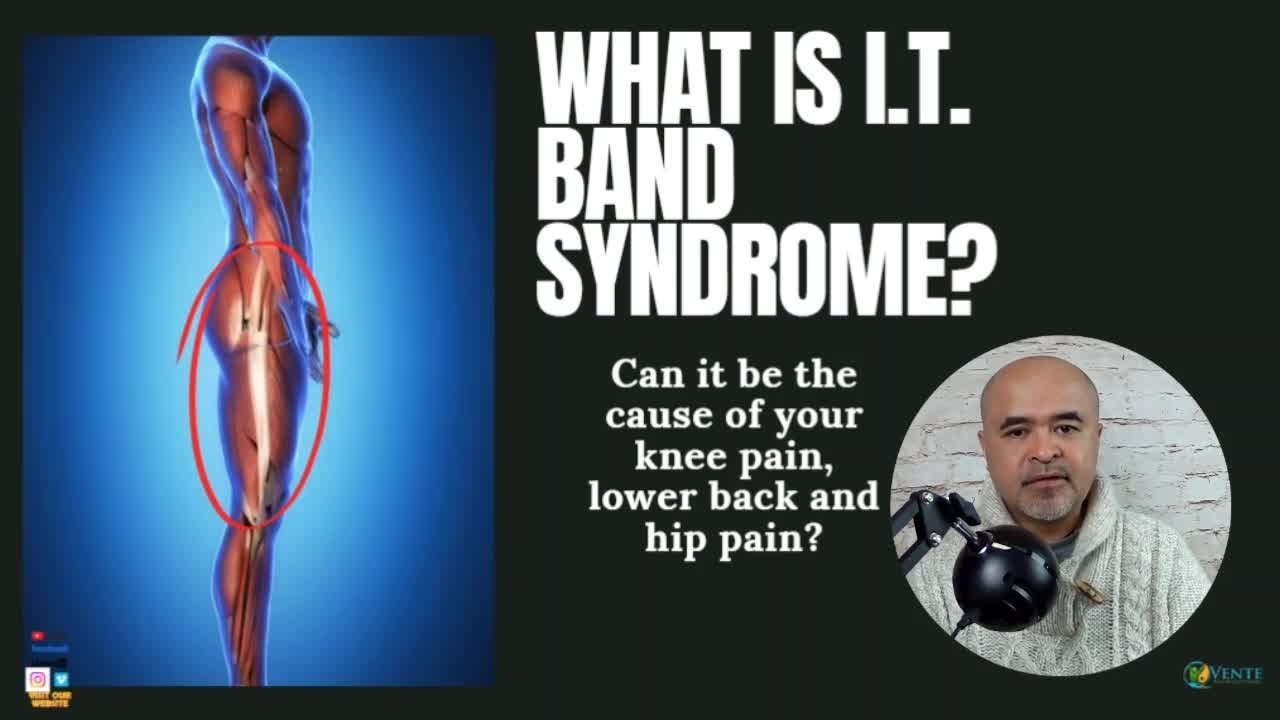
What is IT Band Syndrome? The Iliotibial Band, or IT Band, is a thick tendinous tissue that runs down the outside of the thigh. It runs from your pelvis to just below your knee. It attaches to the side of your lower leg.
What it does
An important function of it is to stabilize the lateral knee (outside of the knee). It is an interesting structure. Two muscles blend into it. They pull on the tissue when they contract. One muscle is found on the “front, outside” of your hip. This muscle is the Tensor Fasciae Latae. The other muscle is your Gluteus Maximus.
An example of when these muscles pull on the IT Band is when you are running up hills. They also pull on the Iliotibial Band when you are running on uneven surfaces.
As the muscles become tight and over worked, especially on one side, it can cause pain and discomfort.
Usually this can be due to using one leg more than the opposite side. Running on uneven surfaces can cause this. Pushing off more on one leg can also contribute. This happens during exercises like the squat. It can also be from landing consistently on one leg versus the other for jumping sports such as volleyball.
If you are a runner or train intensively in the gym, you maybe encountering hip, knee and lower back pain. Tight It Band can cause these symptoms. Watch the video to learn more about the IT Band. Do you have your own experience with tight IT Band, please share your story.
Are you doing research on the cause of your pain and discomfort? We suggest our video on the Piriformis muscle . This muscle can also cause pain down the leg. Do you use the foam roller, learn about it’s limitations here. This is from our Pain Relief Fitness site vprc.ca.
Can It band syndrome cause lower back pain?
Can It band syndrome cause lower back pain? Yes, it can. It is in more of an indirect way. Simply, when one side becomes tight it can cause an imbalance in the pelvis. It can pull the pelvis to one side, your hips and lower back can get impacted by the imbalance causing pain and discomfort.
When one has an imbalanced pelvis, they can find one side of their lower back can become tight and painful. This is can be because of increased work of the muscles on one side. They become overworked causing the symptoms.
A Typical Treatment
In regards to treatment, the therapy can be intense. Many years ago, I attended massage school. The emphasis was on directly working on the side of the thigh. This is where the structure lies.
Over the years, I have gained experience. I have found that better results occur with aggressive work in the gluteal and hip area. The two muscle that were mentioned earlier, the Gluteus Maximus and the Tensor Fasciae latae are mostly targeted.
Once these muscles become looser the lateral thigh, where the IT band sits feels less tight. The treatment can also involve compensating structures such as the lower back, feet and Quadriceps.
Typically after the treatment, I ask the patient to stand. I ask how they feel standing. Then, I ask them to move their hips and pelvis. If I have loosened the specific areas involved, they will tell me they feel less tension. They will also communicate that they feel a lot looser.
Although the treatments can be painful, it can do wonders in relieving pain and discomfort. Some individuals have a tendency to develop muscular imbalances. This is especially true for the muscles of the pelvis and hip. It is generally a good idea for them to schedule maintenance appointments.
It is also beneficial for patients to have their own prescribed self-care routines. These routines can help them manage pain and discomfort between treatments. Some techniques can involve stretching or self-massage. Other methods include techniques for the fascia, posture awareness, and using pressure points or a foam roller.
Do you suspect that your pain is caused by tight IT Band? Call us, let us show you what Deep Tissue Massage can do for you!

