Table of Contents
Knee Pain Relief
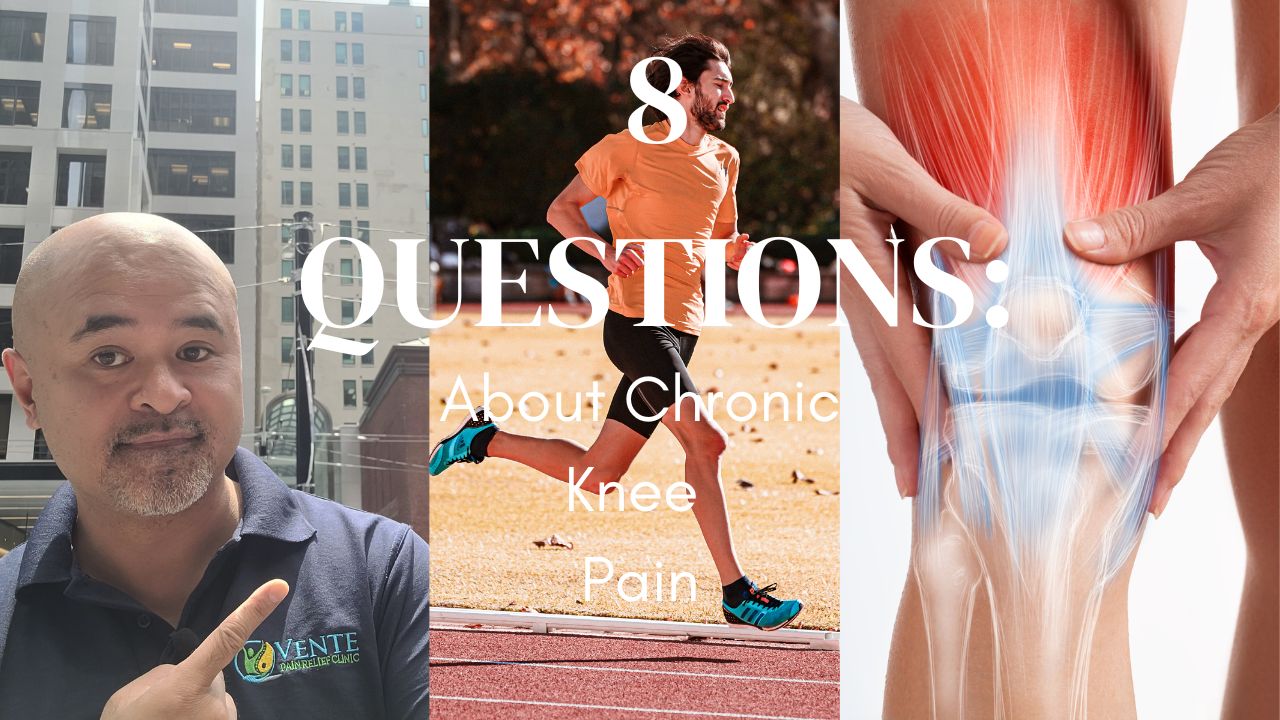
Knee pain relief is a common treatment for those that are very active. Here are 8 Questions: About Chronic Knee Pain. Watch the video to learn more. Chronic knee pain can cause you to avoid activities that you enjoy. Many runners, volleyball players, basketball players, cyclists and even those that do gardening, may suffer from chronic knee pain and tightness.
The pain can be from structural issues such as torn meniscus or ligaments or tendons. It can be mostly mechanical such as this example, a pelvic muscular imbalance causing IT band syndrome. Another example is patellar tracking issues. Simply, it’s when the knee cap improperly “sits” when the knee is being flexed and extended. Most commonly are issues with the muscles and fascia. The muscles and fascia can be very tight causing discomfort. The muscles can also have trigger points that can refer into the knee.
What are 3 muscles that can commonly cause knee pain?
- Quadriceps group of muscles: This seems to be a very obvious one. When these muscles become extremely tight it can cause issues such as limitations in range of motion, tightness and discomfort. There can be referral pain from trigger points in the muscles. For example the Vastus Medialis muscle, located just above your knee on the “inside” of the thigh can refer pain into the knee cap. The Vastus Lateralis (the most “outside” of the Quad muscles), refers to the outside of the knee. Finally the Rectus Femoris muscle which runs from the hip to the knee cap, can refer into both the hip and the knee. There are 4 in the group but these 3 are the most common trouble makers.
- Tensor Fasciae Latae (TFL) and Gluteus Maximus: I put these two muscles together because both blend into a structure called the Iliotibial band (IT band). The IT band is a thickened, tendinous tissue. The TFL runs from the “top of the front, lateral side of the thigh” and blends into the IT band. The IT band attaches to the lateral side of the Tibia just below the knee. The Gluteus Maximus is the largest and most superficial of the glute muscles and also blends into the IT band. These two muscles work together to stabilize the knee when you are weight-bearing on one side. It is a beautiful mechanical thing. Unfortunately, there are times when the muscles work too much, usually more than the other side. This causes pain located on the outside of the thigh and the outside of the knee.
Scar Tissue and Knee Pain
Knee pain relief is a definite when it comes to scars in and around the knee. Typically this can be from surgeries. Scars that are immobile can pull on pain sensitive structures such as fascia, muscles, bone and nerves.
Often I advise patients to have the surgical scar mobilized as soon as their MD permits it. The timeframe is usually around 6-8 weeks before the scar is healed enough to be worked on. The reason you would want the scar mobilized as early as possible is for preventive reasons. Over time the scarring can become thickened, stuck and immobile causing pain and discomfort.
My opinion is that the quicker you have the scar treated, generally the better the future outcomes over time.
There are more important points about knee pain relief. In the video I discuss more about this subject. Watch it now!
There is a definite need for knee pain relief, when these muscle become chronically tight. The treatments can be quite painful, as many runners, cyclists, triathletes and workout enthusiasts can attest. However there are tremendous benefits to when the muscles become looser from deep tissue massage.
Contact us now to discuss your treatment. It’s time for knee pain relief.

More resources:
Learn more about knee pain relief. Knee pain symptoms can also be caused by the IT band. Learn more about how this can happen here. Your Quadriceps angle (Q-Angle) can predispose you to knee pain. Visit our Pain Relief Fitness site to watch our video and read our blog.
