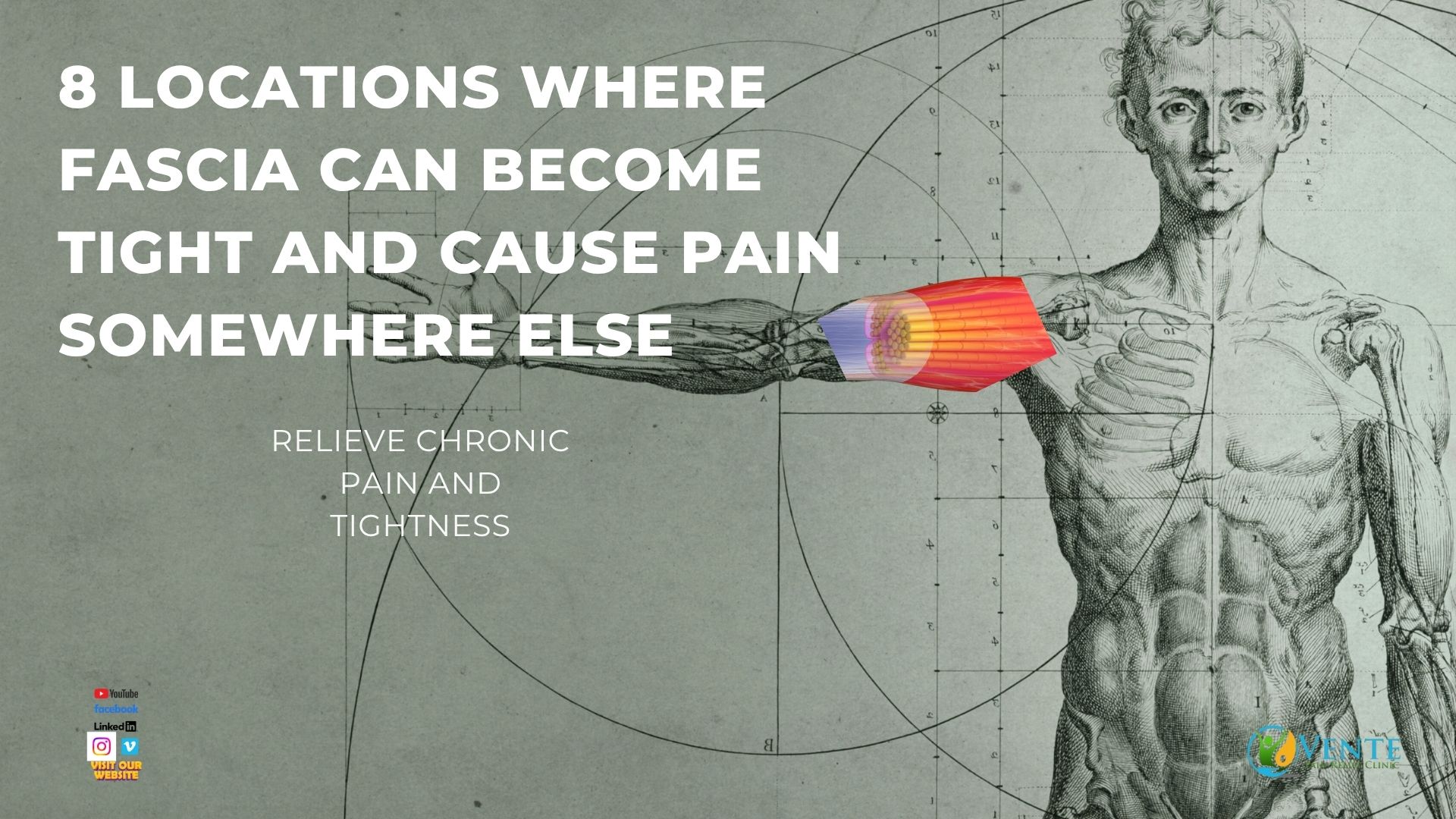
Tight Fascia can Lead to Chronic Pain
Tight fascia can lead to chronic pain. Fascia is the connective tissue that lies underneath the skin. It connects everything together. It wraps around bones, muscles, organs, nerves. When it becomes tight it can cause pain and discomfort.
Many years ago, the fascia was considered “unremarkable tissue”. In fact anatomy textbooks would have minimal mention of fascia and what it actually is and does. In many textbooks, you will see that when an area is underneath the skin, it is shown by removing the fascia. It is depicted by cutting away the fascia.
Today, there is more of an understanding of fascia as living tissue. It is highly adaptable. Sometimes too adaptable. What that means is that your fascia and muscles can react to your posture. It will shorten and become within an area that remains short for a prolonged period.
Fascia is Adaptable
A typical example is an office worker that sits at their desks for hours. These individuals will eventually have short and tight fascia of the pectoral region. They will also experience tightness in the front of the neck, the front of the thigh, and hips.

Over time this can cause pain and discomfort. In rehabilitation, oftentimes their can be a neglect in regards to the amount of time spent on the fascia. and more on the muscles. Although the muscles and fascia are intertwined, at times there are situations where the muscles are more this issue or the fascia is more of the issue. Treatments should really be based on this. Just because the condition looks to be muscular in origin, doesn’t necessarily mean that it is the prime cause, exacerbator or the root.
I believe a good reason for why many patients have prolonged chronic pain and discomfort is that their treatments may need to be adjusted. A different mindset must take over and looking more into the fascia can be a game changer.
Fascia can cause pain locally. For example, a patient may have lower back pain and the obvious area to look at, is the tight fascia of the lower back. It can also happen away from the tight area. This can happen with many patients who have had chronic pain and tightness for a prolonged period. This could be from months to literally years.
Common Examples and Treatment
As a therapist I have 4 examples:
- Chronic pain and discomfort of the hip/gluteals/lower back region, stemming from tight fascia of the calves.
- Pain between the shoulder blades due to tight fascia of the pectoral muscles.
- Tight fascia of the arms exacerbating pain and discomfort of the neck.
- Releasing the tight fascia of the bottom of the feet, loosening up the thighs and legs.
Often when these areas are aggressively treated the symptoms can decrease. Typically, the treatments can be very painful and uncomfortable. The amount of discomfort can be due to factors such as how chronic the area is, the amount of tightness and the subjective feeling of pain and discomfort of the patient.
We generally advise new patients to have 4 consecutive treatments, once a week over 4 weeks. We believe that this is a fair timeline to assess progress. After the 4th we reassess and discuss how they are responding and further treatment options.
After treatment most patients feel that they have improved mobility, decrease in pain and discomfort and a general sense of feeling “looser”. In this video I discuss how tight fascia can cause pain and discomfort elsewhere.
The video details 8 Locations Where Tight Fascia can Cause Chronic Pain Elsewhere. Watch to learn more.
This is a video we suggest if you suffer from chronic neck pain, Chronic neck pain and tight fascia. We also suggest this video to release tight forearm fascia on your own. It is from our pain relief fitness site vprc.ca
If you suspect that your pain and discomfort is rooted in tight fascia, please give us a call and we can discuss your case and treatment.
