Table of Contents
Neck Pain and Tight Fascia
Neck pain and tight fascia. We will be discussing a presentation that patients can present with. There is a potential link between tight forearm fascia and chronic neck pain and tightness. Find out more with this video.
What can happen?

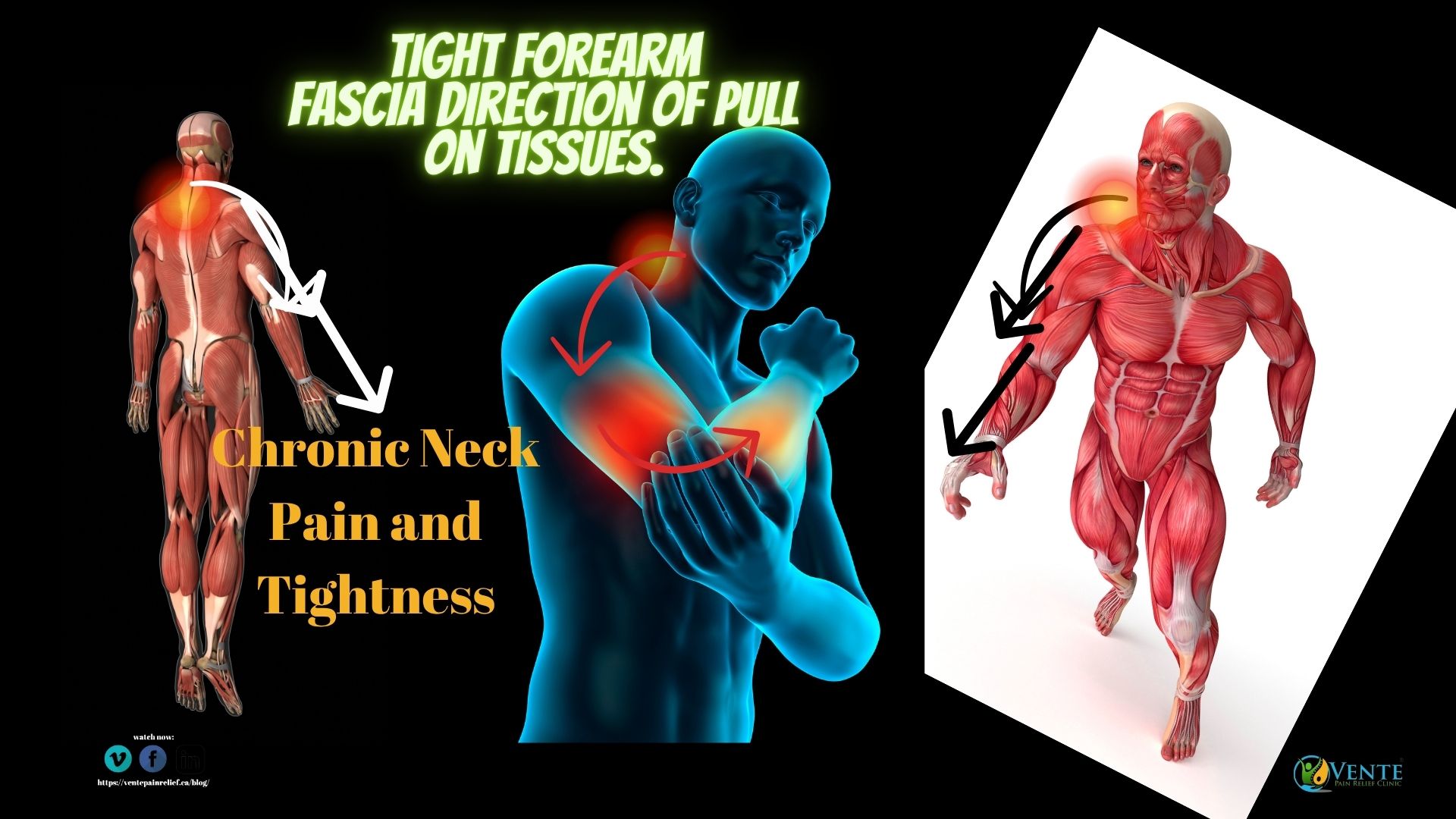
The above picture illustrates what can happen when the fascia of the forearm becomes tight. Fascia is the connective tissue that lies under the skin. It wraps around the muscles, organs, bones, nerves, ligaments and tendons. It runs deep, wide and lengthwise. It connects everything together.
When the fascia becomes tight it can cause pain and discomfort locally. It can also cause symptoms further away. This happens in this presentation. The fascia of the forearms can become tight and be the primary cause of neck pain. This can be the case for those that suffer from long-standing neck pain.
Typical Patient Profile
The patient that will have this issue have some commonalities:
- They work at a desk for prolonged periods
- They have terrible posture, usually they have a head forward, rounded shoulder posture at work
- Stretching is almost done minimally or none at all
- They do a lot of typing
- Have forearm or wrist pain and discomfort (this is important because there is an assumption that the two lack a connection)
- Have had chronic neck pain for a long time. Usually months
- Have also had many treatments and usually a focus locally on the neck
- Minimal significant positive changes to their neck symptoms
This is the typical background of one who can be a candidate for this type of treatment.
Why treat the fascia of the forearm?
Neck pain and tight fascia. Specifically of the forearm can be treated. When the fascia of the forearm becomes tight, it can cause issues in the wrist and hand. It can also affect the forearm. Tightness of the forearm fascia can also “pull” on structures higher up. The pulling can extend into the shoulders and neck.
Usually, the assessment will focus on extreme tightness. This involves the muscles and fascia of the back of the neck, extending to the base of the skull. In fact you can palpate (feel) from the neck, down the shoulders, upper arms to the forearms, wrist and hand. In fact the tightest areas are the forearms.
Commonly, patients will have had treatments focused locally to the neck. Superficially it makes sense. The pain is in the neck, therefore the treatment should be focused on the neck.
Neck Pain and Tight Fascia Treatment
There are 3 locations that I will look at when treating long-standing chronic pain. The first area is the muscles of the arm pit that attach to the shoulder blades. Second, the jaw. Often treating the jaw muscles can release tight and painful neck muscles. Finally, the forearm fascia.
As I begin to work on the forearm fascia, the patient often indicates how much pain they feel. They also mention the discomfort in the forearm. This can extend into the wrist and hand. Typically the patient will tell me that they have been having wrist pain and forearm tightness for awhile. They notice the tightness in particular when they are typing.
Neck pain and tight fascia of the forearm can be treated. What happens during the treatment is that I will go back and forth from the forearm to the neck. Assessing and reassessing the reaction of the neck muscles. The neck muscles over time becomes softer. When muscles soften it is a strong indicator that the treatment is working.
Depending on the degree of tightness, it can be very uncomfortable to excruciating at times. Also, the time spent on the forearm is usually longer than actually working on the neck. You can feel sore after treatment for a few days. This soreness can be alleviated with heat and an epsom salts bath.
Do you think you fit the profile of someone with neck pain and tight fascia of the forearm? Please contact us to discuss treatment.
More resources:
Are you ready to book your appointment? Book now. On our Instagram I discuss an area of the upper back, where the fascia can become tight and cause headaches.

