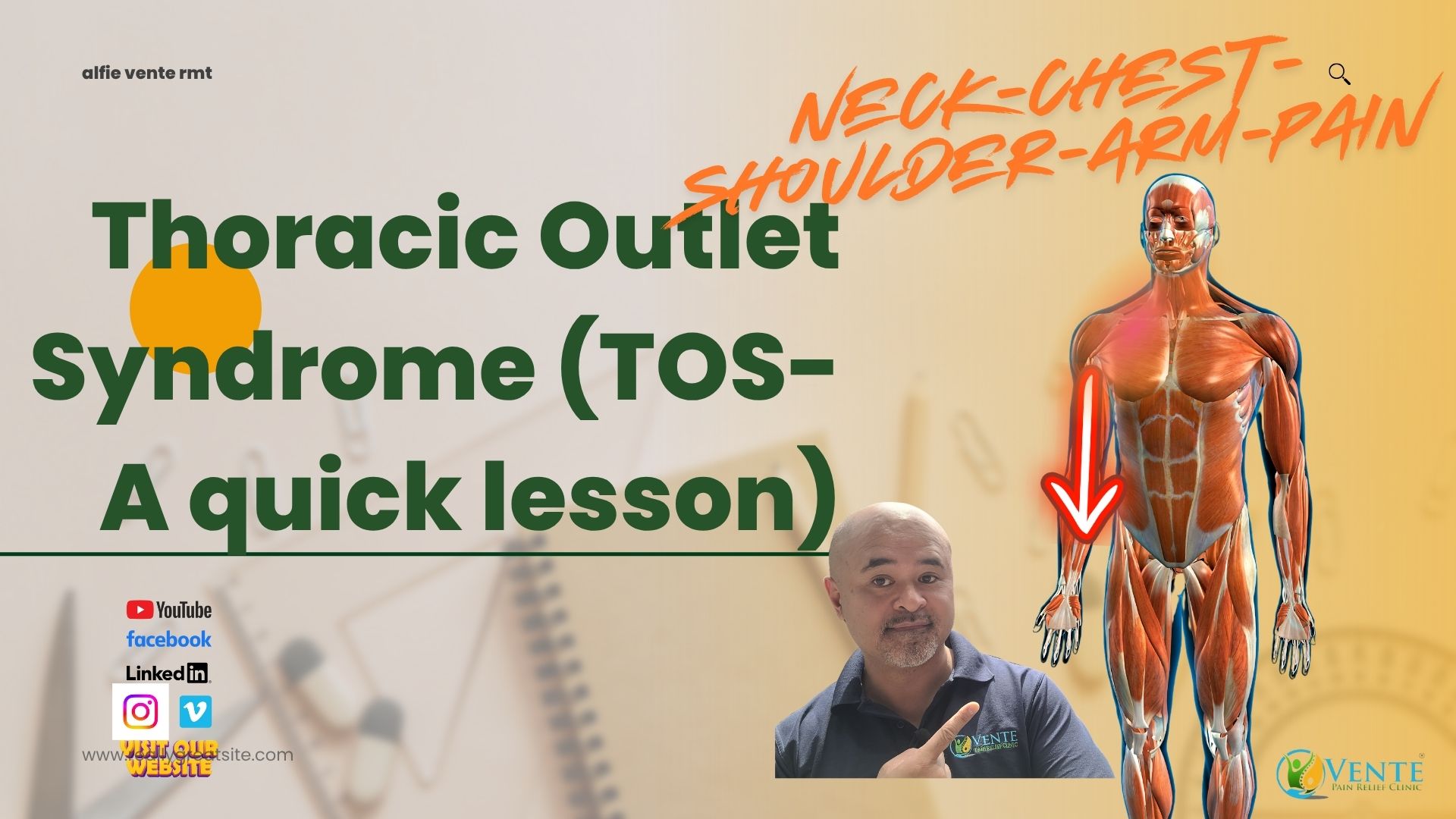
Thoracic Outlet Syndrome
Thoracic Outlet Syndrome can be an annoying and chronic condition. Some of the symptoms include chest, shoulder, neck and radiating pain down the arm. Learn more about this condition. Watch now!
Thoracic Outlet Syndrome is a general condition. The nerves and blood vessels that exit the neck and travel down the arm are compressed. This compression causes pain, numbness, and tingling. weakness and at times swelling.
For those that suffer from this it can be annoying to impacting your daily activities.
There are typically 3 locations where the nerve can become compromised.
Scalenes
The Scalenes is a group of 3 muscles that are located in the neck. Their function is to elevate the upper ribs when you inhale. As a group they also draw the neck forward, rotate and side bend it.
When the Scalenes become tight and short, they can press on the nerves. These nerves and blood vessels pass through them before moving down the arm.
The Scalenes can become short and tight if you maintain a head forward position for prolonged periods. This often occurs when you are looking at a computer screen.
Typically a person also rotates and bends to one side. This action causes one side to become tighter. It is rarer to have both sides be symptomatic, and it can happen. However, in most cases it is a one sided condition.
Costoclavicular Syndrome
The nerves and blood vessels can also be compromised between the clavicle (your collar bone) and your first rib. It is called Costoclavicular Syndrome.
This can happen typically in those that carry heavy backpacks for prolonged periods. What happens is the heavy load can decrease the space between the collar bone and the first rib. This is where the nerves and blood vessels exit.
This can cause the symptoms that are felt down the arm.
Pectoralis Minor Syndrome
Thoracic Outlet Syndrome can also be caused by the Pectoralis Muscle becoming tight. This muscle lies in the chest and is deep to the larger Pectoralis Major.
This muscle becomes tight by having a constant rounded shoulder posture. This can be from sitting in front of a laptop for long periods and drawing the shoulders forward.
From my experience the two most common roots of TOS come from the Scalenes and Pectorialis Minor.
This condition generally develops over a long period of time. It is uncommon to have this condition strictly from a traumatic root.

Treatment
There are a number of goals when it comes to treating Thoracic Outlet Syndrome. Below is a short general list:
- Relax the soft tissues involved. This is both muscles and fascia.
- Treat compensating and exacerbating factors. For example, there might be an issue with the rib cage muscles. This issue causes the Scalenes and Pectoralis Minor to work harder.
- Correct posture via post treatment exercises.
- Correct potential behaviors that were the cause of the condition.
If you have symptoms down the arm, it can be Thoracic Outlet Syndrome. It is time to have it looked at. Contact us and we can assist you in deciding the best treatment plan for you.
Depending on individual condition the treatments can be very uncomfortable. This is especially true if the muscles and fascia are extremely tight. it also depends on the length of time the person has had their condition.
Initial round of treatments is usually 4 treatments over 4 consecutive weeks, once a a week. After the 4 we reassess and decide on the next stage of treatment.
Encountering shoulder pain? Watch this video. Are you using the plank exercise and noticing shoulder discomfort? This helpful tip can help.
