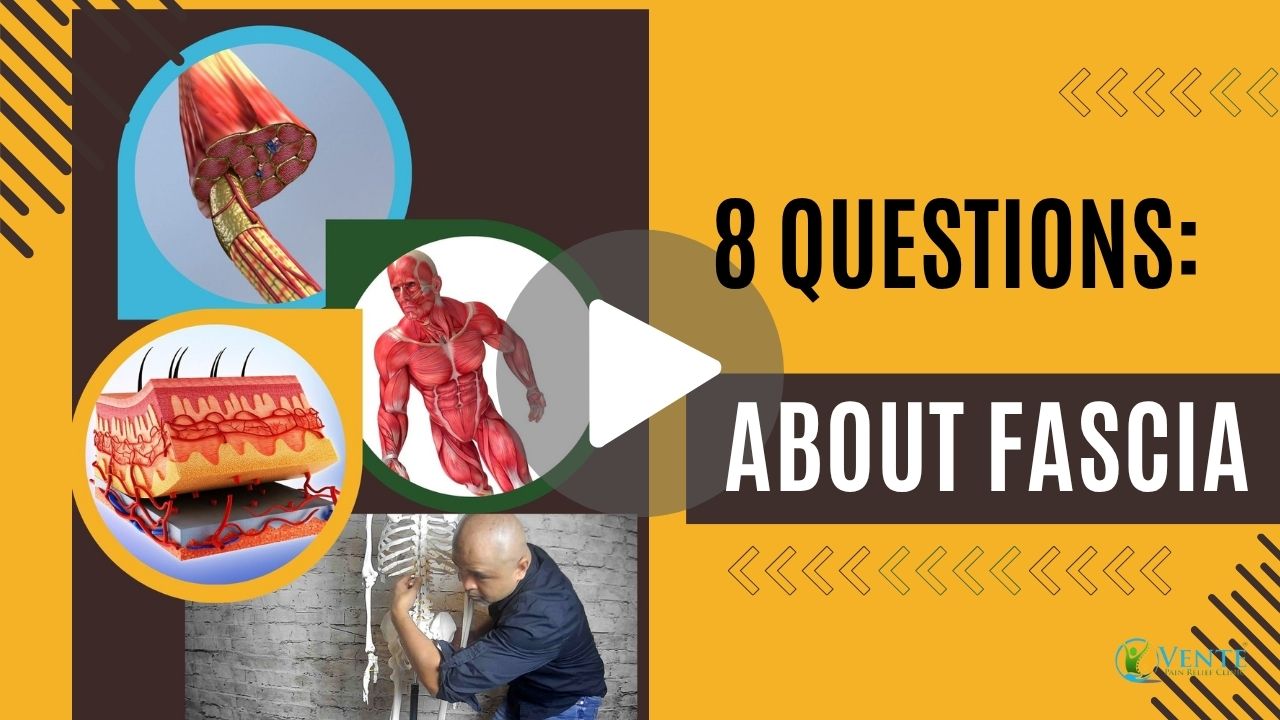
About Fascia
8 Questions: “About Fascia”. It is the connective tissue that lies underneath your skin. It wraps around bones, muscles, organs, muscles and nerves. When it becomes tight and dysfunctional it can cause pain symptoms. This sequence of videos answers some of the common questions about fascia. Watch the video and learn how tight fascia can cause chronic issues.
Fascia is living tissue. It is highly adaptable. It gives us form and separation of different structures. It can also provide protection. This connective tissue connects everything together. Fascia is a wonderful anatomical structure and over the years I have really gained an appreciation for it.
How does it Become Tight?
There are a number of reasons that fascia can become very tight. It can be caused by a traumatic injury, lack of hydration, or scars. Hormones like estrogen and relaxin can impact it also. Over time, stress and anxiety have also been observed to be factors.
Poor posture is the number one reason for tight fascia. We consistently observe this issue at the office.
Typically it’s the office computer posture. The one where one is sitting for prolonged periods, have their head forward and rounded shoulders position.
Over time as the tissue becomes tighter and tighter it can cause pain and discomfort. This can be felt locally and away from the area.
What are Some Signs that it is tight?
Common signs can include local pain and tightness. It can cause a pulling, tight feeling away from the area of tightness. A good example is when someone tries to stretch their neck by side bending. They may feel a pulling sensation into the jaw and face.
The fascia can also irritate nerves causing muscle spasm and pain.
The one common sign that I have often seen is that patients complain of chronic pain. There is often tightness in an area such as the lower back. They have received many treatments. They feel better for a short time, but then the discomfort returns.
This indicated to me that the issue might be less about being local. Perhaps it is more of an issue away from the area of complaint. A great example of this is when I treat a patient. The patient has chronic hip and lower back issues. The primary exacerbator is actually the calf. Specifically the fascia of the calves.
When the tissue loosens from the treatment, there seems to be improved mobility of the lower back and hips. This is when I actually assess the area. Also, the patient will relay to me that their pain and discomfort is a lot better.
Another common presentation is when the pectoral region (the chest) becomes tight. This can be from sitting in front of the computer with rounded shoulders. The tightness pulls the shoulders forward. It causes the muscles between the shoulder blades to become sore and painful. This happens due to overwork from working against the pectorals’ influence.
This presentation is very typical for patients who work in Toronto’s Financial District.
It Can Impact Breathing
When the fascia becomes tight around the rib cage it can hinder movements such as expansion of the ribs. This motion occurs when you are inhaling.
This can happen with people that are shallow breathers and may be prone to anxiety and stress. Often when the rib cage is treated, the patient will notice that their breathing feels better. They will find that even their stress and anxiety seem to be alleviated.
If you have experienced chronic pain and tightness for a long time, it is important to know. You are not alone. Many individuals receive treatment but feel that the relief is only short term. It is time to have a serious look at your fascia. Contact us and we can talk about your case and how we would treat it.

Find out 8 locations where the fascia can become tight in this video. Here is a simple tip on easing lower back pain.
