Table of Contents
Groin Pain Trigger Points
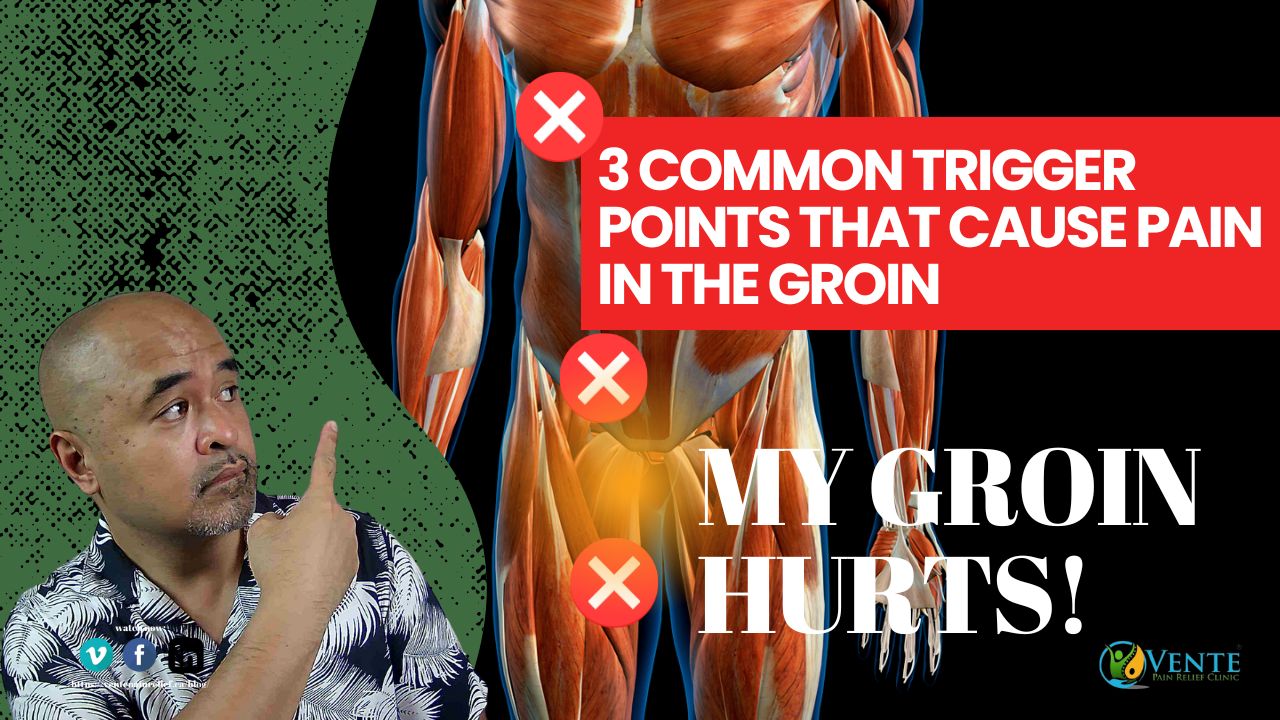
Groin pain trigger points can be the source of pain and discomfort. If you are very active, you might eventually find discomfort in the groin area. Engaging in many lower body activities can contribute to this discomfort. Find out 3 muscles that require deep tissue massage to relieve the discomfort. Watch the video to learn more.
What are Trigger Points?
Trigger points are taut bands in a muscle (knots), that can refer to other areas of the body. This is generally away from the area where the trigger point lies. Common examples include the Piriformis muscle that is deep in the gluteal area and can refer down the leg. There is also the Scalenes neck muscle. Trigger points in this muscle can refer down the arm.
There are multiple ways that trigger points can develop? The common reasons include underuse or overuse. Postural issues and lack of stretching are also common causes. At times, they can develop over time through a traumatic injury.
How can this impact my daily activities?
Groin pain trigger points can have an impact on exercises and movements. If these trigger points are active it can cause pain regardless of movement. You can encounter pain just being stationary. Sometimes this can be low grade and at times the pain and discomfort can spike.
Groin pain trigger points can negatively impact motions such as the squat or lunge. It can impact exercises such as the inner thigh machine. Also, movements such as lateral, side to side motions can also be impacted. For example if you play tennis, you can be slower moving laterally. This can be from the pain and discomfort. It can also be from weakness since trigger points can cause weakness or even both weakness and pain.
So what are the key muscles that become tight and cause groin pain trigger points?
Key muscles
Although there are more than 3 muscles that can cause groin pain trigger points, we will discuss 3 common ones.
One thing to keep in mind is that sometimes the trigger point is a symptom. The root cause can stem from other factors.
The 3 common muscles:

- External Oblique: This muscle is part of the Abdominal group. It seems like a strange muscle to refer to the groin are but it can. One way that trigger points can develop is by over doing core exercises without stretching. The Abdominal group just like other muscles require stretching to balance out the strengthening.
- Adductor Longus: This muscle is part of a group of muscles, the Adductor group. These muscles draw the thigh in towards the mid-line. This muscle can also refer towards the knee. A motion that can aggravate symptoms can be bringing the thigh “outwards” from the mid-line.
- Iliopsoas: Of the groin pain trigger points this one can also refer to the lower back. Typically, two clues that can lead me to believe that the Iliopsoas is implicated are: i) lower back pain, ii) pain and a pulling sensation when moving from a seated to a standing position.
Groin pain trigger points can be treated. Depending on degree of tightness the treatments can require aggressive deep tissue work. This can be combined with treatments to the fascia.
The treatments can be very painful but it can help ease the pain and discomfort of groin pain trigger points. Are you encountering pain around the groin area? Do you suspect the pain is stemming from trigger points? Please contact us and we can discuss your treatment.
More Resources:
There is a muscle, Sartorius. If tight it can cause pain in the groin, thigh and knee. Learn more about a stretch that can help from our Pain Relief Fitness site vprc.ca. Do you have questions about deep tissue massage and treatments to the fascia? Here is our page with more information.
