Introduction
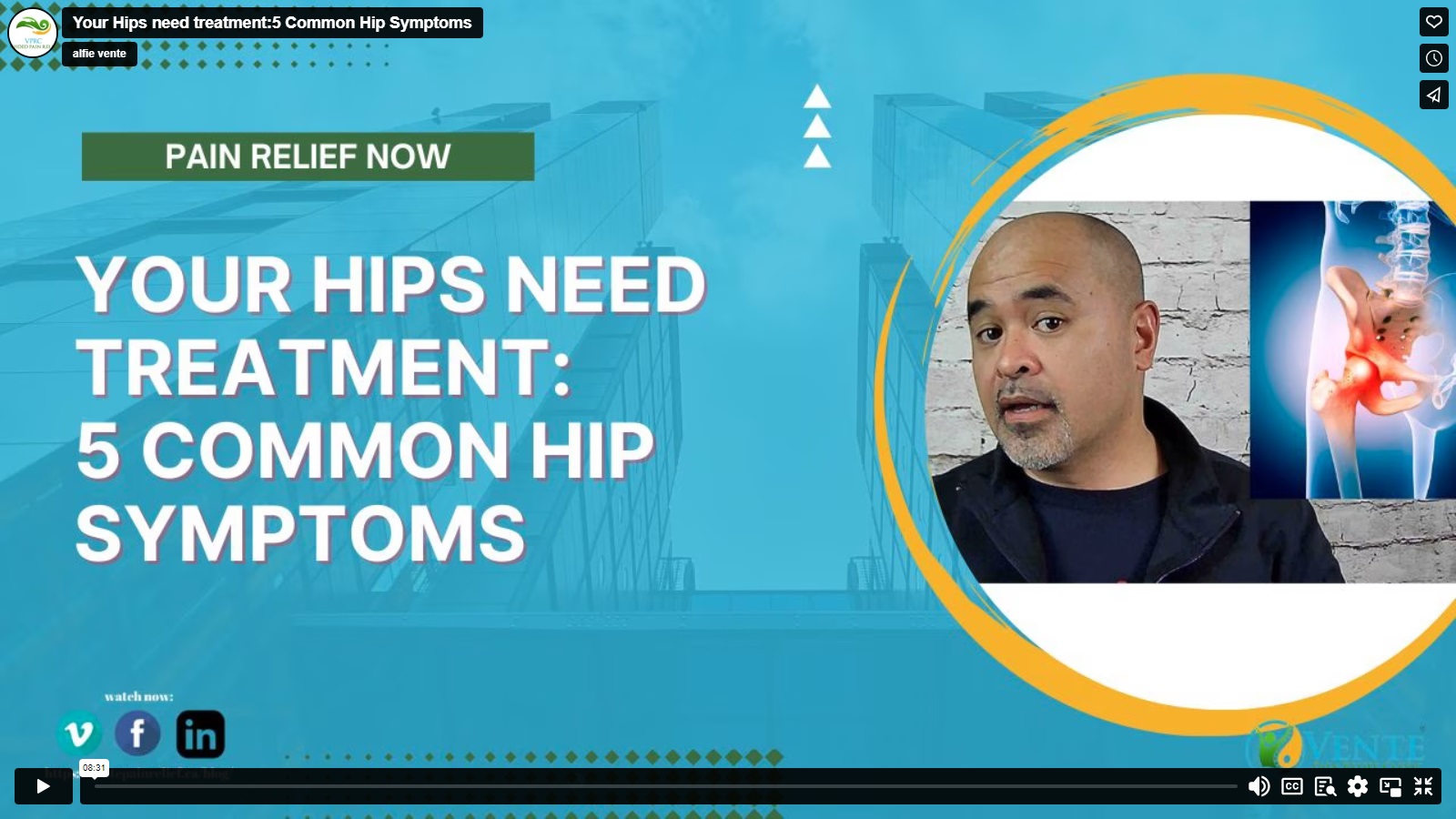
Hip pain treatment is one of the most common treatments we do at the office. Typically, when a patient discusses hip pain, they will describe an area in and around the Glute muscles. Technically if the issue is the actual “hip joint” the pain is usually felt more into the groin. These are 5 common hip symptoms to let you know that it is time to get treatment. Lower back pain, hip pain and even heel pain can stem from the hip muscles. Watch the video now to learn more.
The hip region is an area with large powerful muscles. These muscles overlay smaller, deeper muscles. The smaller muscles help stabilize and rotate the hip. There are times when they become painful and tight requiring hip pain treatment.
How do they become dysfunctional?
- The muscles become overused and over worked. Usually what occurs is that there is an imbalance of activity and stretching. The patient will admit that they do minimal stretching. In this instance, over time the muscle become very tight.
- It can also be a case of sitting for prolonged periods at your desk, typing away at your computer.
- A predisposing factor can be muscular imbalances of the muscles of the pelvis.
- An issue lower down such as the foot or the knee. This can cause biomechanical issues “up the chain”.
- There can also be referral from the lower back and the Sacroiliac joint. In fact these 3 areas can refer pain to each other. The lower back can refer to the hip, the hip to the sacroiliac joint etc.
If any of these things listed is happening, it is time for hip pain treatment.

Five Common Symptoms
Hip pain treatment can give you powerful relief. You can actually encounter other symptoms outside of the five listed. In that case your treatment can require an even more nuanced approach. These are some of the common symptoms that the issue is pointing to your hip:
- Localized pain, tightness and discomfort.
- Pain and discomfort into the upper thigh and groin area.
- Lower back pain.
- Lateral (towards the outside) knee pain and discomfort.
- Inner thigh pain, sometimes going all the way to the inside of the knee.
To get more of a breakdown of these symptoms, please watch the video.
Hip Pain Treatment
Whenever a patient walks into the office, the assessment starts when I observe how the person walks. For example, do they walk with a limp? What side? Do they seem to be rotating their legs outwards? How do they carry their head and neck? Are they carrying a knapsack? If so, what side?
These are the questions I quickly ask myself, even before I interview the person. Hip pain treatment requires astute observations to help with the assessment.
Generally, when I treat the patient I will look at contributing and exacerbating factors. For example, is their pelvis balanced? Do they also have lower back tightness? How are their calves? Sometimes there are deeper issues. These issues have predisposed the patient to problems with the hip. Such problems require hip pain relief treatment.
Typically the issue is one sided. The individual tends to favor one side versus the other. One example is pushing off with one leg more than the other. This can happen in exercises like the squat or the lunge.
If the actual root is one or a couple of the hip muscles, I will focus on those areas. I will use aggressive techniques to access the muscles. This is especially true when it comes to the deeper muscles of the hip
Hip pain treatments can be painful and uncomfortable. However, they usually result in a better range of motion of the hips. There is also a diminished sense of pain and discomfort.
In order to properly formulate a treatment plan, it is a good idea to consult with a professional. If you feel that your issue requires a deeper form of massage, please contact us.
More Resources
Do you have hip pain? Does it refer down the leg? The Piriformis muscle can give you these symptoms. Watch this video now! This is a stretch that can be done for tight hips/glutes.
More on managing your pain:

5 Strange Symptoms of Extremely Tight Fascia
The video explores five unusual and strange symptoms of extremely tight fascia, the connective tissue beneath the skin. While localized pain is common, tight fascia can also cause discomfort in distant body areas, such as the hips and lower back. Understanding these symptoms is crucial for effective pain relief and mobility.


Shoes for Pain Relief? A Massage Therapist’s Concise 8 Point Review
Are there shoes for pain relief?This content explores the role of footwear in pain relief from the perspective of a seasoned therapist with 25 years of experience. It delves into how proper shoes can help manage common discomforts like lower back, hip, shoulder, and knee pain. The review includes an examination of the Birkenstock Bend…

Plantar Fasciitis Treatment; Important Information on How I use Deep Tissue Massage
Plantar Fasciitis treatment, using deep tissue massage can ease the pain and discomfort. Chronic Plantar Fasciitis can cause significant pain and discomfort, often requiring a more aggressive treatment approach. Deep tissue massage is highlighted as an effective therapy in managing this condition. The accompanying video provides insightful details on how deep tissue massage can alleviate…
