Table of Contents
Tight Jaw Muscles and Migraine Symptoms
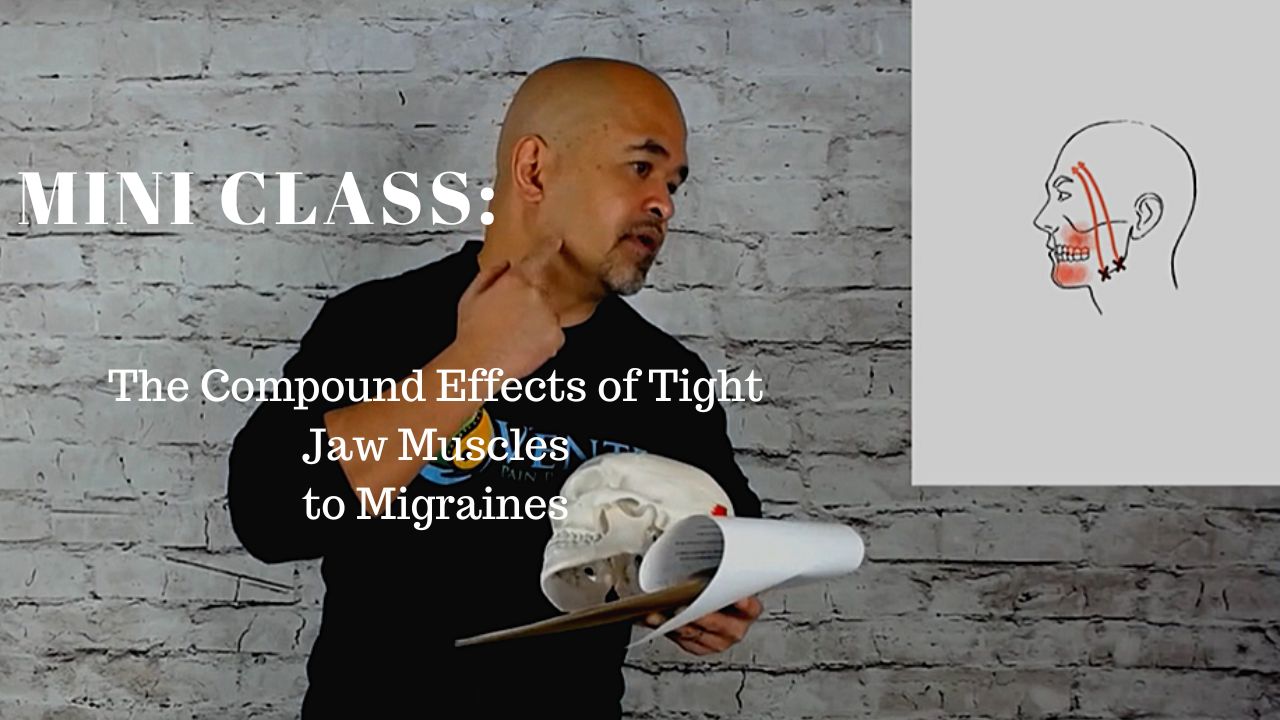
There can be a relationship between tight jaw muscles and migraine symptoms. Do you suffer from migraines? The muscles around your Temperomandibular joint (TMJ, AKA the Jaw) can compound your symptoms. Watch this video to learn more.
How do jaw muscles become tight?
The muscles of the jaw are just like typical muscles of the body. Muscles can become tight from over work and overuse. This can be caused for example by chewing on one side of the mouth. It can also be from grinding and constant clenching of the teeth.
Many patients commonly present with teeth clenching. This occurs when they are under a tremendous amount of stress or anxiety. Being that our clinic treats many office workers in Toronto’s Financial District, this is very typical.
Symptoms of jaw tightness
Tight TMJ muscles can present in these manners. There can be local pain, discomfort, and tightness. Muscles can have trigger points that refer to the head and face. Trigger points can also refer symptoms in the ear.
Another symptom that can appear is neck pain and tightness. The jaw and the neck are connected. Chronic neck tightness can cause issues in the jaw and chronic jaw tightness can also cause neck pain and discomfort. In fact one of the areas we treat to relieve long-term chronic neck pain and tightness is the jaw.
So what is the link between tight jaw muscles and migraine symptoms?
What can be the link?
This is a clinical observation I have found over the years. Many patients that I have treated that have TMJ pain and discomfort also suffer from migraine. What I have found is that as the jaw muscles relax, over time it seems that migraine symptoms become better. I will underline that this IS NOT a cure but something that I have noticed over the years.
What are some of the things that have been noticed? Although, the primary condition being treated is the jaw tightness. It can be a positive consequence that the migraines can also improve. Typically, during follow-ups I will ask questions regarding patient migraine symptoms. The feedback is that over time, frequency, intensity and duration become lessened. For example, a person has a tendency for 3 migraines a week. They will give me the feedback that their symptoms have gone from 3 to 2. Just as an example.
I will also notice that as I treat the patient, the jaw muscles have softened. This is relative to previous treatments. Additionally, trigger point activity has decreased.Overall the jaw pain and discomfort has also diminished. Is there a link? Possibly. Tight jaw muscles and migraine symptoms can be treated.
In Summary
The link between tight jaw muscles and migraine symptoms can be summarized like this. This is a theoretical framework by the way. The symptoms from the tight jaw muscles exacerbate the patients condition. Migraines can cause anxiety and stress that can compound the symptoms of the jaw. The anxiety and stress can cause muscles to become more tight. The patient unknowingly can clench causing these muscles to become tight. This can cause pain locally and symptoms via the trigger points.
Also, as mentioned earlier, releasing the jaw muscles can also relieve neck tightness and pain. neck muscles can also cause symptoms into the head and face.
By focusing on the jaw muscles, it can relieve the pain from the TMJ. It can also alleviate symptoms attributed to the neck. Relax these areas and this can decrease the overall symptoms that a migraine sufferer can have. Also, massage has an overall relaxing effect.
Do you have tight jaw muscles and migraine symptoms? Please contact us so we can discuss your case.
More resources:
Did you know that tight fascia can cause headaches? In this video we explain why this can be the case. Have you been finding that your neck seems to be very tight? Here is a stretch that can help decrease the tightness.
